Comfort Zones Don’t Keep You Safe—They Keep You Still

We get comfortable with life and get habits that we stay with and to some degree for life. Are you stubborn and not willing to change? I was for some time as well. I was often accused of being anal retentive. My books had to be in a specific order and if someone moved one to be funny I felt myself coming unglued!

I decided I didn’t want to be held hostage by my habits that made me feel safe and comfortable. I started mixing books up on purpose. I’ve made uncomfortable changes over the last few years.

The cost of ‘safe’ is invisible compounding—skills you never build, clients you never meet. Decluttering one shelf isn’t about stuff; it’s about proving you can.

A practical way to leave your comfort zone using tiny experiments, safety nets, and momentum—no hype, just steps.

I got out of my comfort zone when I moved into real estate. I got out of my comfort zone when I started doing YouTube videos. I got out of my comfort zone when I got a GoPro camera for trail riding videos. I started a new business recently that’s separate from real estate and aimed at serving seniors.

I’ve been using ChatGPT and using it regularly. I’ve been taking more courses to learn more.

What would get you out of your comfort zone? What would you like to learn or do that you’re afraid to or don’t think you’re good enough?

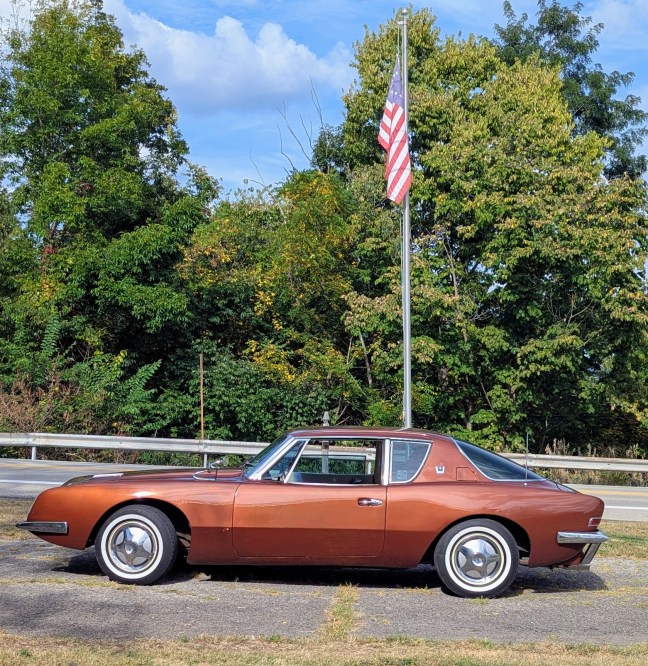
I took a 600+ mile trip in my 1963 Studebaker Avanti last month from Roanoke, VA to Washington, PA.

Do you REALLY want to improve your business?

Is your business busy, but you’re not seeing the profits you’d expect?  It may be that you appear busy, but it’s really an illusion due to inefficiency.

Over the years I’ve reviewed business workflows and made recommendations from small to large.  The majority of business owners are convinced that there’s room for improvement and they’re right.  Often either they or their management team don’t want to put the effort into anything new or different than their current ways of accomplishing tasks.

I know a restaurant consultant that has complained of similar frustrations.  Restaurants are one of the most poorly run businesses I’ve seen and with the most unhappy employees.  In chain establishments the home office usually does a good job of laying out training and the business model on paper.  Employees new to the industry are enthusiastic and like what they see during training videos, but once they begin the actual work they discover that none of these methods are followed and fellow employees complain constantly, don’t care, and can’t wait to leave there the minute they find another job.

I recently had an opportunity to see inside this industry.  I’m one that likes to experience myself and not rely on hearsay.  I couldn’t have been more surprised if I were the Coyote and the Road Runner just dropped a giant anvil on me.  The busier it got with customers, the more employees and management rushed around frantically.  The more customers that poured in during lunch and dinner the practices and procedures covered in the training videos and materials went right out the window.  This included many health violations.

The other side of why this happens is not enough staff.  There were several employees that were optimistic and the true team player encouraging other employees.  But there were only a handful of these.  With not enough staff and everyone expected to do any job required in the place jobs weren’t completed as they should.  New employees were tasked with duties they’d never performed.  With this came many health violations due to lack of knowledge.  Employees were tasked with picking up prepared foods with their bare hands with no idea that gloves were required.  The same went for clean dishes.  “Hey, Joe, go get us some clean bowls” sent Joe to pick up a stack and return with them bare-handed with part of his hand grasping the inside of the bowl.

This is a domino effect of course because the employees don’t like rushing around in a crazy frenzy and not having specific duties and therefore don’t stay long.  Because of the high turnover more employees come in and no one stays long enough to really become a valuable part of the team.

Managers all have different styles and while this isn’t uncommon in any business, when it’s so drastically different that they may contribute to the frenzy or work against the ‘rules’ of the company and make it worse.  District managers come in once in awhile, but may not see the real problems or career restaurant people just consider it part of the norm.

What’s the answer?  Well, for one all employees should receive general safety training.  New employees should stick with one duty and when they master that merge them into another duty.  Ask employees what they like, dislike, and would like to see changed.  Hire enough staff to do all the jobs.  If you don’t have money for a dishwasher for example, asking everyone to pitch in and wash dishes won’t do anything but cause people to quit which costs you more money.

Those of you that know my training techniques understand already that I firmly believe in changing just one small thing and training in small increments.  The same goes for any change.  Whether you’re trying to change your restaurant business, lose weight, or declutter small steps are key.

What small step can you change?

How I Created A Start-Up in One Day

This summer I read The 7-Day Startup by Dan Norris.  I admit I was skeptical.  It was a book recommended by the author of another book that I really enjoyed so it was worth my time to try it.  What I found was that it made sense.  I was completely surprised.  You see, when I was in college in the stone ages I was taught that to start a business you needed research, a good business plan, and lots of prep to see if it even made sense to start the business you had in mind.  If the market share wasn’t there, then it wouldn’t fly.  Dan’s book was the opposite of this.  It turned my degree in Small Business Management/Entrepreneurship on it’s head.

I shouldn’t have been surprised because I launched a business in one day.  Back in 2001 my secure job as CAD Manager came to a sudden end when a new president took over the company I worked for the previous 10 years.  It was his decision that he didn’t see a value in having a department to create drawings in AutoCAD for salesmen to present plans to their clients or full construction drawings to show the installation crews how to install the project and get permits or even as-built drawings to provide to clients.  I was suddenly out of a job!

I was level-headed enough to not burn any bridges even though I was not in a good mood.  I had just purchased a house a matter of weeks before and hadn’t even made my first mortgage payment.  I did over to buy any of the equipment or software, but was denied.  Still, I felt like something could change.  It was a gut feeling and I listened to my gut in this instance.

The very next morning word got out to the rest of the company what happened.  I received a phone call from the most successful salesman with the company.  He asked if I would be willing to work on a contract basis.  See, my gut was right!  I agreed and set to work.

By the end of the day I had created a name for my business, CAD Fuel Design.  I applied for a business license with the City.  I obtained software from a colleague of mine through the software user group (networking pays off).  By the end of the day I had a business and was ready to roll.  Later I would add QuickBooks for invoicing (I typed invoices in Word initially), a laser printer, a large-scale plotter, and a better computer.

For the next 10 years I continued the drawings of fuel stations that I’d done for the previous 10 years and never skipped a beat.  I followed the standards I’d created when I was tasked with starting their department from scratch.  My clients grew to include other companies that were started by other employees that left the company and ventured out on their own.

I worked some other jobs over the years, but kept my business going on the side.  I couldn’t leave it.  It made for some very long hours often working 8+ hours at a day job and coming home to a quick dinner and then working until bedtime and/or weekends.  I always turned work around quickly.

I didn’t realize at the time or even years later that this was anything special.  Now when I look at the idea of just jumping in and starting a business it doesn’t seem so foreign.

Who will you influence?

I recently had a conversation with my dad.  We talked about some of the books I’ve been reading and he brought up the idea that he believed because I was raised in a small business environment I was better prepared for the world and more open in business.  I never gave that any thought EVER.  Do you think it’s made any difference in your life?

Yes, when I was very young my father ran the local airport.  He was a flight instructor also.  He started his own trucking business when I was in elementary school.  I began answering phones after school and taking messages.  My voice has never been feminine so people would always comment on how polite his ‘son’ was on the phone.  I later began making appointments and by late junior high I was doing quotations for customers.  In high school I took some accounting classes and did the day-to-day accounting which transferred to my grandmother who was in business for herself as a public accountant and who did our taxes at the end of the year.

I also learned a lot from my grandmother.  She worked in the trucking business for decades in freight claims near the end.  She began working from home and doing books for a number of clients and doing audits for businesses and her church.  Come January she was always swamped with income tax business through April.  She wouldn’t turn anyone away.  She did this until the day she died at age 98.  A true inspiration.

I don’t know that I am any more rounded than anyone else, but I do have a background and positive experiences in business.  I know how important it is to look and act professionally.  I realize how important word of mouth and customer service is.  Any of these not handled well can sink a business.  I ran my own business for 10 years.

I’ve done other business as well even if not officially a business.  For a few years I ‘flipped’ cars.  Before the Internet I would buy rust free cars in Oklahoma where I lived and adverstise them in Old Cars Weekly, a national paper, and sell and deliver them to buyers in the rust belt.

I’ve also been a very successful eBay seller.  I started in 2001 when my late husband (before we married) began moving some of his belongings from Philadelphia (where he lived) to Roanoke, Virginia (where I lived).  There was a lot of overlap or things he decided to part with.  We would make sure everything was clean and take excellent marketing photos.  He would generally write the descriptions as he was a great writer.  We researched similar items that sold and were selling to find our starting price.  We sold some amazing stuff we never believed.  After his death I carried on and spent six months carefully cleaning, photographing, and researching vintage go-kart speed parts and lived on that alone.

I was fortunate enough to have a lot of great role models in my family.  Everyone contributed in some way to who I am today.  We all have opportunities to influence people.  You don’t need to have children to influence someone.  How you act, what you write, what you do with your life can all influence.  Who will you inspire today?  Will it be something you say at dinner?  Will it be something you write give pause and makes someone think?  We all have that power.  It’s what you choose to do with it that matters.  Who will you influence?